A Short-Day Visit to a Village Sports Ground
Plan a short-day visit to a village sports ground around daylight, a simple route and time to notice the pitch, pavilion and winter landscape.
The common mistake on a short-day visit to a village sports ground is to plan around the match and treat the journey as incidental. That can cost the best light, leave too little time to find the entrance and turn a quiet winter outing into a hurried search for the way back. A little attention to daylight and route makes the ground itself easier to see.
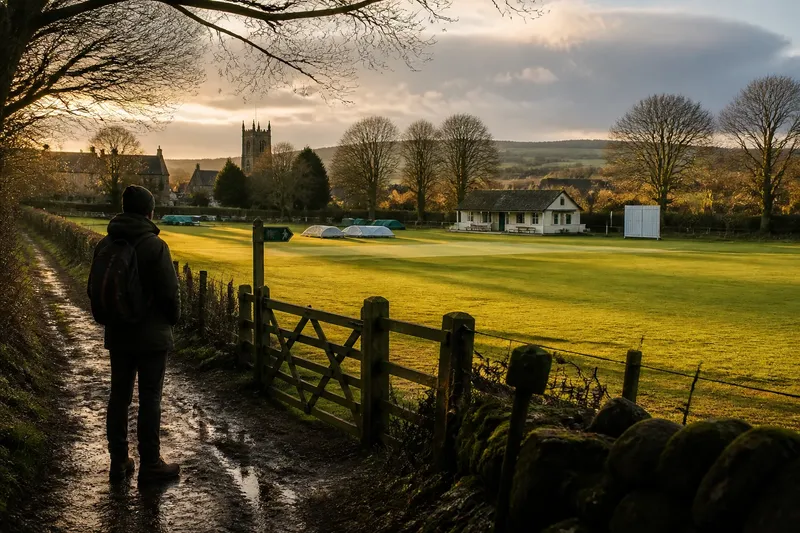
Say you are planning an invented winter visit to a village cricket ground, with no fixture to attend and no assumption that the gate will be open. The useful aim is modest: reach a public viewpoint while there is light, follow a straightforward route, and leave time to notice how the place sits within its surroundings. The plan is not a promise of access. It is a way to make the outing worthwhile even if the ground is closed.
Choose the light before choosing the ground
In winter, the most attractive route on a map may be the least sensible one if it leaves a long walk after dusk. Start by deciding when you want to be heading home, then work backwards. Check the local forecast and daylight for the day of the visit, and allow room for cloud, muddy paths and the slower pace of looking around.
Do not plan to arrive at the last usable light. Low sun can make a pitch’s surface and its setting easier to read, but it also leaves less time to locate a gate or retrace a lane. A visit with a clear turning point is calmer: if the light changes or the path is worse than expected, you can shorten the walk without having to invent a new route on the spot.
For this imagined visit, the traveller chooses an early afternoon departure rather than aiming for a sunset view. The expected result is simple: enough daylight to look over the ground and return along the same familiar way, without depending on a torch to make the route legible.
Keep the route easy to explain
A winter route should be easy to describe to someone who has not been there: from the village centre, along the main lane, past a recognisable landmark, then to a public path or viewpoint. A paper map or an offline map on a phone can help, especially where mobile reception is unreliable. Save the route before leaving, and note the point where you intend to turn back.
Prefer a lane or established footpath over a tempting cut across a field. Grass can conceal standing water, and a track that looks firm from the road may be slick underfoot. Wear footwear suited to wet ground, and take a warm outer layer. Keep the outing proportionate to the weather rather than treating a short walk as an excuse to test it.
Imagine the route reaches a signed public footpath beside the ground, but the entrance to the playing area is shut. The visitor stays on the public path, looks through the boundary from there, and continues no farther than the planned turning point. The observable result is still a visit: the ground can be noticed without crossing a gate or assuming that a sporting space is open to passers-by.
Notice what winter makes visible
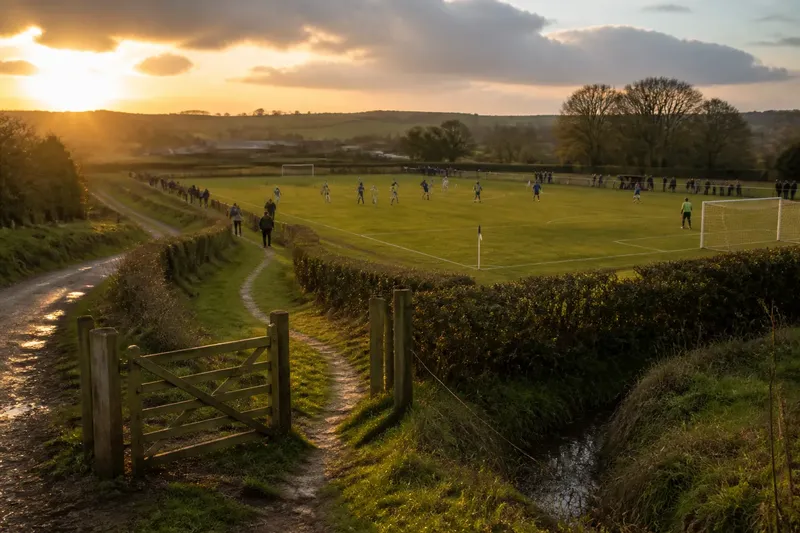
A ground is more than the rectangle used for play. From a lawful public viewpoint, look at how the pitch relates to the village: whether the pavilion faces the lane, whether trees shelter one side, and whether the ground sits on a rise or in a hollow. These details help explain the place without needing a match, a signboard or a local history lesson.
Winter also reveals practical features that summer growth can soften. A drainage ditch may mark the low edge of the ground. Bare branches can expose a view towards the church tower or nearby farms. The boundary may be easier to follow when hedges have thinned, although a hedge is still a boundary, not an invitation to climb through it.
Look for signs of the ground’s seasonal pause: covers stored near a pavilion, a gate secured for the off-season, or marks where equipment is kept. Do not infer that people are absent or that anything left in view is available to handle. Observation is enough. A village ground often tells its story through arrangement rather than display.
What should you check before setting out?
Is the ground open to visitors?
Check the club’s public information if available, but plan on the basis that access to the playing area may be restricted. A public footpath or roadside viewpoint can still provide a useful look without entering club property.
How much daylight should you allow?
Allow enough light for the outward walk, a pause at the ground and the return, with extra room for slow or muddy sections. Set a time to turn back rather than waiting for the sky to make the decision for you.
What should you take on a winter visit?
Take suitable footwear, a warm layer, a charged phone and a map that remains available if reception drops. A small torch can be a sensible reserve, but it should not be the plan for finding an unfamiliar route after dark.
Can you visit when no match is scheduled?
Yes, if the approach and viewpoint are public and you respect any signs or closed gates. A quiet visit can be more useful for noticing the layout, the surrounding lanes and the way the ground meets the village.
Leave time for the walk back
For the invented outing, the visitor turns back while the pitch is still visible in good light. On the return, they take the same lane rather than adding an unfamiliar loop, and pause at a village noticeboard to check whether future public fixtures are listed. The expected result is a relaxed end to the visit and one practical lead for another day, not a claim that the ground was open or that a match will take place.
This is the useful lesson of a short-day visit to a village sports ground: the route and the light are part of the subject. A compact plan leaves attention for small things—a pavilion behind bare trees, a damp track beside the boundary, the quiet shape of a pitch waiting for its season—while keeping the return as clear as the arrival.
Before setting off, make the turning point as definite as the destination. That one decision is often what lets you linger without watching the light every minute.