Pavilion or Touchline: Two Ways to Gather on Match Day
Pavilion or touchline: see how each shapes match-day company, conversation and club routines, then choose the gathering place that suits your local game.
The common mistake with a pavilion or touchline is to treat them as interchangeable meeting points. They are not: one costs you some of the match’s movement, while the other can leave you standing in the weather with a conversation cut short by play. For a local club, the better gathering place depends on what people have come to share: the game itself, the company around it, or both.
The pavilion gives match day a centre
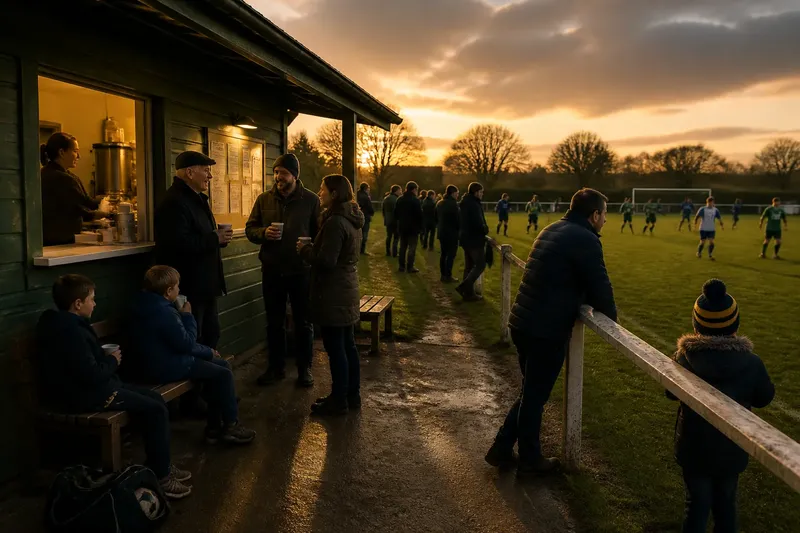
A pavilion makes a match feel like an occasion with a place to return to. It may be a modest clubhouse with a serving hatch, benches and a noticeboard, rather than an architectural statement. Its value lies in bringing small routines together: arrival, a cup of tea, a glance at the team sheet, a pause between halves and a final conversation before people leave.
That central point suits clubs whose social life extends beyond the playing time. Families can settle in, spectators can meet friends without arranging a precise spot on the boundary, and players have somewhere to change or regroup if the building is equipped for it. A pavilion also gives volunteers a practical base for welcoming newcomers and sharing ordinary club information.
The trade-off is distance. From indoors, a spectator may miss the feel of a close contest: a fielder adjusting position, a player calling to a team-mate, or the brief hush before a decisive moment. Windows can help, but they frame the match rather than place you inside its changing rhythm. People who value conversation more than continuous sight of play may find that entirely acceptable.
There is also a social threshold. A building can feel like the club’s home, but it can also look as if it belongs to members who already know one another. A clear welcome matters more than a polished noticeboard. A visible sign, an open door and someone willing to explain where visitors may sit can make the room feel shared rather than private.
The touchline keeps attention with the play
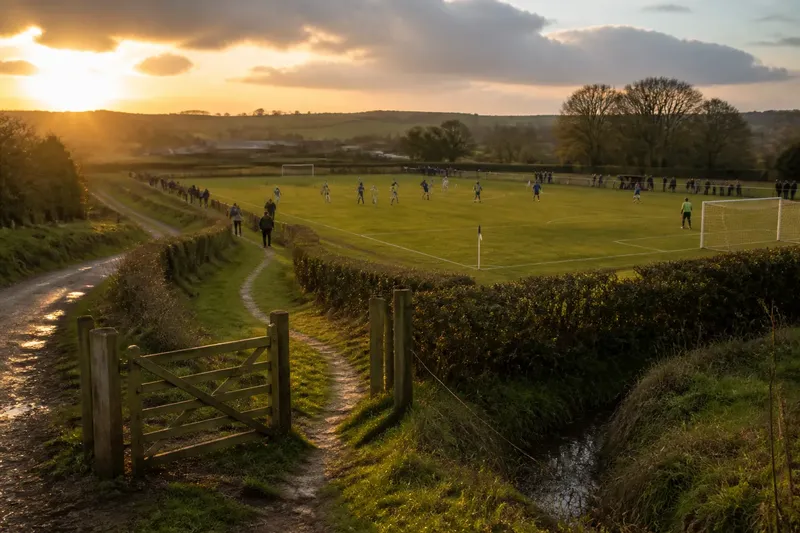
The touchline puts spectators close to the match’s changing shape. On a football pitch, people can follow runs, hear calls and see how a team responds when possession turns. At a rugby or hockey fixture, the same position brings the physical pace and tactical shifts nearer. In sports played around a wider field, the nearest boundary still offers a direct view of the action passing by.
This closeness suits people who come chiefly to watch, and those who like to follow a match by talking through it as it unfolds. A parent can keep an eye on a young player; a regular can compare the current formation with the one used last week. The conversation is tied to what is happening now, which can make it lively without needing a room full of club history.
But a boundary is a poor place for an uninterrupted catch-up. A ball may pass between speakers, spectators may need to move for play, and people spread along the line can become separate groups. Weather also has a say. A waterproof coat and a spot with a clear view may be enough for some; others may prefer to watch from shelter and join the crowd outside only for a spell.
Access matters here. A touchline can offer a straightforward view, but the ground may be uneven, muddy or difficult to approach for someone using a mobility aid. Clubs can consider firm paths, suitable viewing areas and a place to rest without blocking spectators or play. The right arrangement depends on the ground and the needs of the people using it.
Choose the place that fits the gathering
Neither setting is automatically more sociable. The pavilion encourages people to return to one shared point; the touchline makes the match itself the shared point. A club with a friendly room can still leave visitors unsure where to go. A lively boundary can still make a newcomer feel stranded among conversations that began long before kick-off.
Think about who is likely to attend and what they need from the day:
- For close attention to play: favour the touchline, especially when the match’s tactics or atmosphere are a large part of the draw.
- For a longer social visit: favour the pavilion, where people can arrive early, pause between periods of play and stay afterwards.
- For mixed-age groups: look for a way to move between the two, so children can watch from nearby while others sit or talk in shelter.
- For first-time visitors: make the welcome point obvious, then explain where spectators can stand or sit.
- For changeable weather: consider whether spectators can move under cover without losing all view of the match.
Say you are helping arrange a village football afternoon, and several families expect to arrive with young children. You could place a simple welcome notice at the pavilion door, keep the main viewing area near the touchline, and make the sheltered room available for a quieter break. The expected result is easy to observe: visitors can find the gathering point, watch when they wish and step away without having to leave the club’s company.
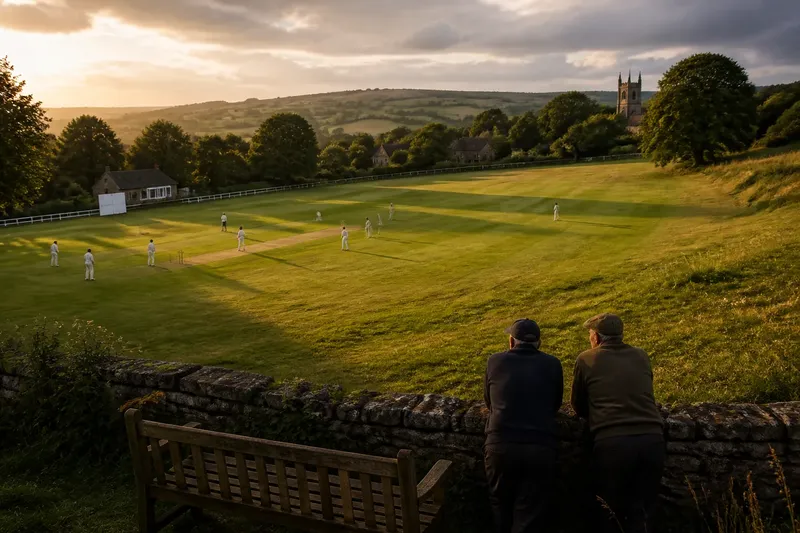
For a small cricket fixture, the balance may differ. Spectators often settle in for a longer stretch, so a pavilion or nearby seating can support conversation while keeping the field in view. If the building faces away from the play, a few well-placed seats outside may matter more than adding another indoor table.
Small arrangements make each place easier to use
A pavilion works best when its everyday purpose is legible. Put the fixture information where people enter, rather than behind a counter or among old notices. If refreshments are available, make the arrangement clear without making visitors feel obliged to buy anything. Keep a few seats free for people who need them, and avoid letting club equipment turn the entrance into an obstacle course.
At the touchline, a little thought can prevent the crowd from becoming a moving barrier. Choose a spectator area that leaves room for players, officials and anyone retrieving equipment. A sign can direct visitors to the usual viewing side, while a clear route helps people arrive and leave without crossing the playing area. Clubs should follow the sport’s governing rules and the ground’s own arrangements where those apply.
It helps to treat the two spaces as connected, not competing. A pavilion door can give people a point to meet before they walk out to watch. A bench near the boundary can let someone join the match without committing to standing throughout. The aim is not to make every spectator follow the same routine, but to offer a few easy ways to take part.
Which match-day gathering place suits your club?
Is a pavilion better than a touchline for meeting people?
A pavilion is usually easier for a settled conversation because people can sit and gather around a common point. The touchline works better for conversation tied to the match, though interruptions are part of the arrangement.
Can spectators use both during one match?
Often they can, if the pavilion is open and there is a safe, clear route to the viewing area. A club can make the choice obvious by identifying the welcome point and the permitted spectator space.
What should a club consider for visitors with limited mobility?
Consider the route from arrival to the pavilion and the viewing area, including surfaces, resting places and whether the match can be seen from a suitable position. Ask visitors what would help rather than assuming that one arrangement suits everyone.
How can a small club make a pavilion feel welcoming?
Use a clear welcome, a visible fixture notice and a person who can answer basic questions. Visitors should be able to understand where to sit and how to reach the touchline without needing an introduction to the club’s entire history.
Let the match decide the balance
A useful choice starts with the day’s main purpose. If people are coming to follow every change in play, make the boundary the natural focus and keep the pavilion available as a refuge and meeting point. If the club is hosting a broader social gathering, make the pavilion the centre and give spectators a clear route to the field.
For a club weighing up a pavilion or touchline, the best arrangement is often a modest combination rather than a winner. Put people within reach of the match, give them somewhere to pause, and make the welcome visible to someone who has never visited before. The small sign by the door may do more social work than the building’s grandest feature.