The Myth of the Perfect Playing Field
The perfect playing field is not always the best village ground. Learn how to judge slopes, rough grass and local quirks without confusing character with neglect.
The common mistake with a village playing field is to treat every slope, rough patch and awkward corner as a defect. The cost is that a club may spend time reshaping familiar ground without first asking whether the feature affects play or needs attention.
A field still needs to suit its sport. But uniformity is not the same as quality. The useful question is whether a feature is understood, managed and compatible with the way the ground is used.
What makes an imperfect playing field?
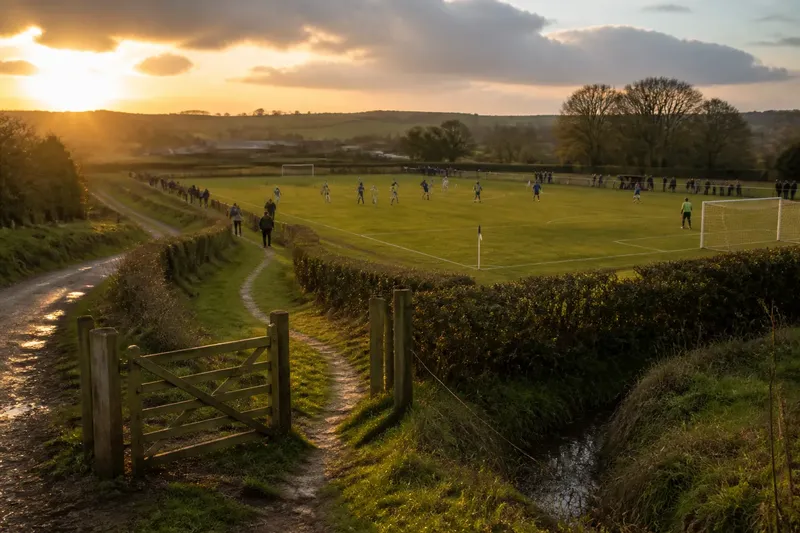
An imperfect playing field has variations that interrupt the neat, predictable surface people often imagine: a gentle fall across the turf, a strip that dries later, a boundary that bends around old trees, or ground that changes character near a hedge. These details may be natural, inherited or shaped by years of use.
Some are inconvenient. A ball may travel differently on a slope. A wet hollow may stay soft after nearby ground has firmed. A lumpy patch can make footing less predictable. Other irregularities matter chiefly because they affect how a fixture is arranged or how players read the space.
Calling all these features faults blurs an important distinction. A harmless quirk can be part of the ground’s identity; a deteriorating surface or an unmanaged hazard calls for attention. The label matters less than what the feature does and how it affects use.
Does an uneven playing field mean it is a poor ground?
No. Unevenness alone does not settle whether a field is suitable. A ground can be irregular and still serve its sport, while a smooth surface may have other problems. The relevant question is whether its condition fits the activity and whether its users understand the changes in the ground.
Look at the setting rather than judging one visual detail. Does the feature affect how people use the field? Do players know where the surface changes? Does the club reconsider its arrangements when conditions shift? Those observations are more useful than expecting identical grass from one end to the other.
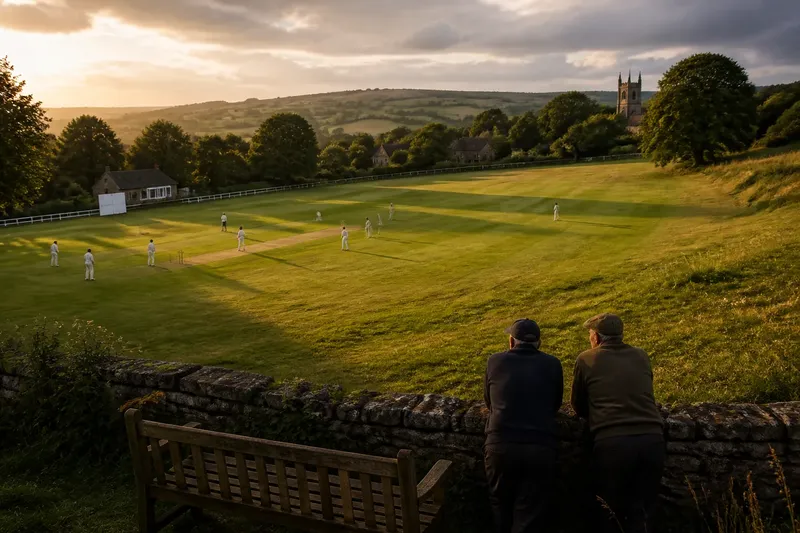
Imagine a village cricket club with a gentle slope towards a line of trees and a hollow that becomes soft after rain. Members note where the ground changes and describe the issue to the committee. The committee keeps the slope under observation but asks a grounds professional to assess the hollow before deciding whether it needs drainage work. The likely result is a decision focused on the particular concern rather than an assumption that the whole field must be levelled.
Which irregular features can shape local character?
Local character often sits in details that would disappear from an idealised drawing. A rise near the edge may frame the ground from the lane. A mature tree may mark a familiar boundary. A patch of heavier turf can reflect the field’s soil, while a slight camber may be so familiar that regular players read it without comment.
These features can carry shared knowledge. Players learn where a ball slows, where the ground stays damp, or which part changes underfoot after rain. That knowledge can inform upkeep, but it does not replace it. People who use the place can help describe its habits; they cannot make every surface suitable by knowing it well.
Character is a quality of place, not a defence of every flaw. An unstable edge or a surface that has become difficult to use does not become acceptable because it is old. A club can value a feature and still decide that it needs attention.
How can a club judge a field without chasing uniformity?
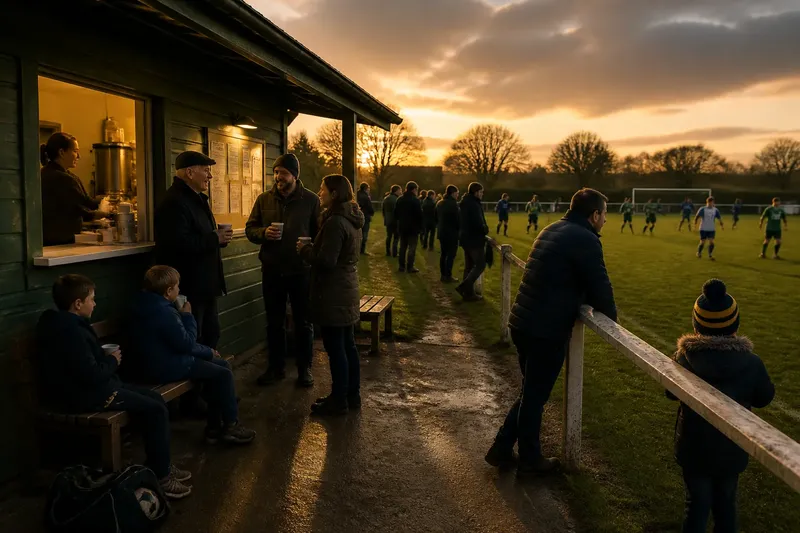
Start with the sport and the people who use the ground. A village football pitch, a cricket outfield and a multi-use recreation field do not have identical demands. Describe the feature and its effect before discussing a remedy.
- Observe where the surface changes. If footing, drainage, ball movement or available space is affected, describe that specific effect; otherwise, record that the variation is chiefly visual and leave it undisturbed for now.
- Ask who uses the area. If the feature affects a junior session, fixture or community event, discuss an adjustment with those users; if it affects no current activity, retain it and review the decision if use changes.
- Compare appearance with function. If a rough-looking margin causes no practical difficulty, avoid work based on appearance alone; if a neat-looking patch remains soft or difficult to use, investigate that function rather than its finish.
- Note the conditions. If a change appears after rain, shade or regular wear, record what was observed and when; if it does not recur, keep the note rather than treating one observation as a settled problem.
- State the decision and reason. If the club accepts a quirk, record why it suits the field’s use; if it needs attention, identify the concern and the next action rather than calling the whole ground poor.
- Check whether specialist judgement is needed. If suitability, drainage or maintenance is unclear, consult the relevant sport’s guidance or a qualified grounds professional; if the issue is plainly cosmetic and has no practical effect, avoid presenting it as a technical problem.
These checks are a way to discuss the same place in concrete terms, not a substitute for technical inspection. Where suitability depends on the sport’s rules, intended use or specialist maintenance, consult the relevant guidance or a qualified grounds professional.
Should irregularities be repaired or left alone?
Repair a feature when it creates a material problem for the ground’s intended use. Leave it alone when changing it would solve no practical problem and would remove a valued local quality. The decision should follow the effect, not a reflexive preference for flatness.
Ask what would change after work. Would players gain a more usable area, or would the field merely look more uniform? Could a targeted response address the concern while retaining the broader character? Sometimes maintaining the surrounding turf is more appropriate than reshaping the land.
Familiarity is not evidence that nothing has changed. Turf wears, and drainage conditions can shift. Equally, a new committee need not remove an inherited oddity simply because it is unusual.
How do players adapt to a field’s quirks?
Players adapt by learning the ground and making practical adjustments within the rules of their sport. That may mean allowing for a slope, choosing a different route across a field, or checking conditions before a session. Such adaptation belongs in ordinary local knowledge; it does not make every irregularity beneficial.
New players need that knowledge made explicit. A long-standing member may know which corner stays damp, while a visitor sees only grass. A short explanation can help people understand where the surface changes and lets the club notice if the old description no longer matches current conditions.
Adaptation has limits. If a feature makes the ground unsuitable for an activity or raises a concern that needs technical judgement, players should not be expected to compensate by instinct. The club should assess whether the field remains appropriate and seek qualified advice where needed.
What do players and clubs ask about an irregular field?
Is a sloping playing field always a problem?
No. A slope may be manageable if it suits the activity and players understand how it affects the ground. Its condition and effect matter more than whether the surface is level.
Can a field’s quirks be part of its identity?
Yes. Familiar contours, trees and changes in turf can make a ground distinct to its users. That identity is worth preserving when the feature remains compatible with the field’s use.
When should a club ask for professional advice?
Ask when the surface’s suitability, maintenance or use is unclear, or when a proposed alteration could affect drainage or the playing area. A grounds professional can assess the particular site rather than relying on general impressions.
How should a club describe a troublesome patch?
Describe what happens there and under which conditions, rather than calling it simply bad. Specific observations help the club decide whether the issue is temporary, manageable or in need of attention.
What should a club preserve about its ground?
Preserve the features that give a field local character when they remain compatible with how the place is used. That calls for attention, not nostalgia: clubs should understand what a feature does, revisit the judgement as conditions change, and avoid alteration for appearance alone.
The myth of the perfect playing field is that sameness makes a better ground. A more useful standard is a place its users can understand, care for and use appropriately. When a slope or rough patch prompts debate, describe what it does on that particular piece of countryside before deciding whether it should stay.